
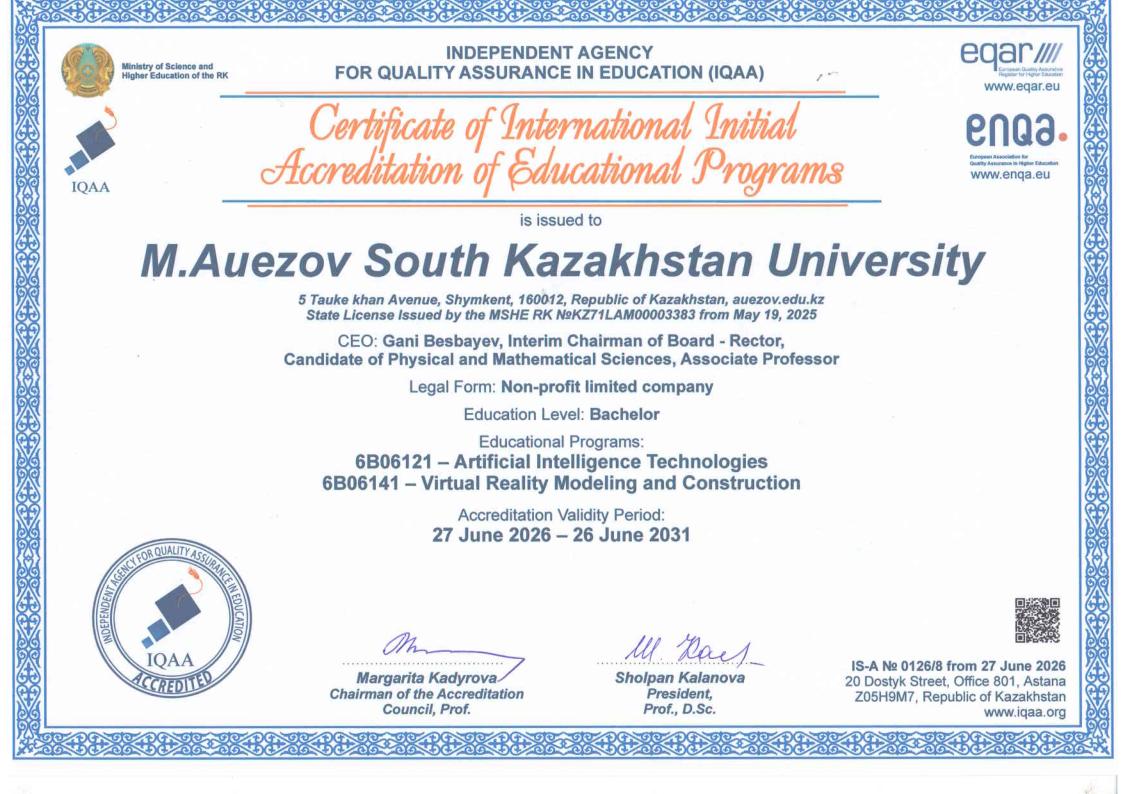
6B06121 Artificial Intelligence Technologies
General Information
- The faculty members and students of the Department of Information Systems and Modeling consistently demonstrate high achievements in the fields of education and science every year.
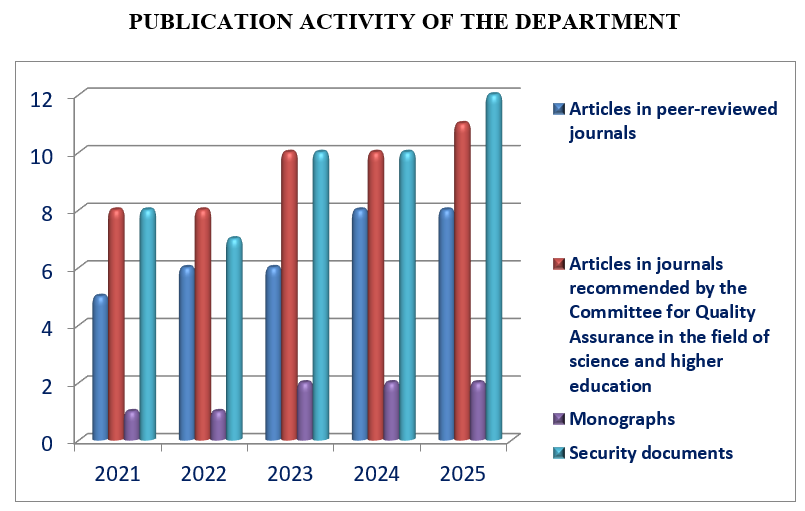
- The academic staff of the department are actively engaged in research activities, publishing their work in various Kazakhstani and international peer-reviewed journals. Each year, the department publishes more than 100 scientific articles in journals and conference proceedings.
- The proportion of academic staff holding scientific degrees exceeds 50%, including 4 Doctors of Science, 10 Candidates of Science, and 2 PhD holders. The remaining faculty members hold Master’s degrees in Information Technology.
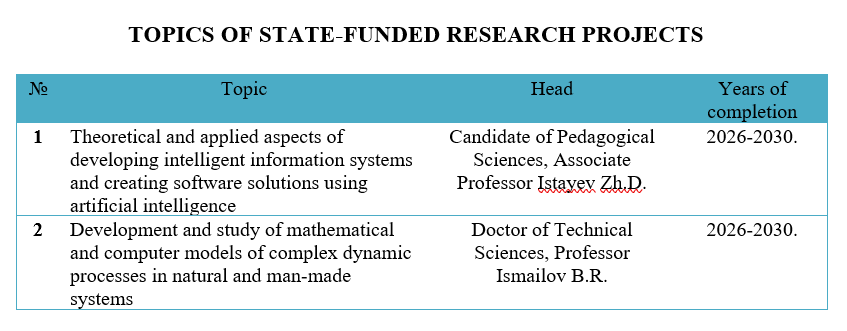
- In 2026–2030, the department is conducting research under the following state-funded projects:
- Theoretical and applied aspects of the development of intelligent information systems and the creation of software solutions using artificial intelligence (led by Candidate of Pedagogical Sciences, Associate Professor Zh.D. Iztayev);
- Development and study of mathematical and computer models of complex dynamic processes in natural and technogenic systems (led by Doctor of Technical Sciences, Professor B.R. Ismailov).
- In 2025–2026, the academic staff submitted 6 applications for grant competitions.
- Active work is being carried out to obtain intellectual property protection documents, including patents, utility model patents, and software copyright certificates. Recently registered patents include:
- Dryer for dispersed materials. Utility model patent. Ismailov B.R. et al., No. 7918, 2023;
- Vortex dust collector. Utility model patent. Ismailov B.R. et al., No. 7920, 2023;
- Wet vortex dust collector. Utility model patent. Ismailov B.R. et al., No. 7921, 2023;
- Circulating water cooling system with seven regenerative heat exchangers. Iztayev Zh.D. et al., No. 10382, April 11, 2025;
- Circulating water cooling system with eight regenerative heat exchangers. Iztayev Zh.D. et al., No. 10949, August 1, 2025;
- Selected copyright certificates: “Development of automated control systems for private production” (2025), “Methodological foundations for applying computational thinking in teaching Python programming” (2025), etc.
- Based on the results of research conducted by faculty and students, 25 implementation acts have been prepared for integration into the educational process and industry.
STUDENT ACHIEVEMENTS
The Department of Information Systems and Modeling at M. Auezov South Kazakhstan University demonstrates strong results in educational and research activities.
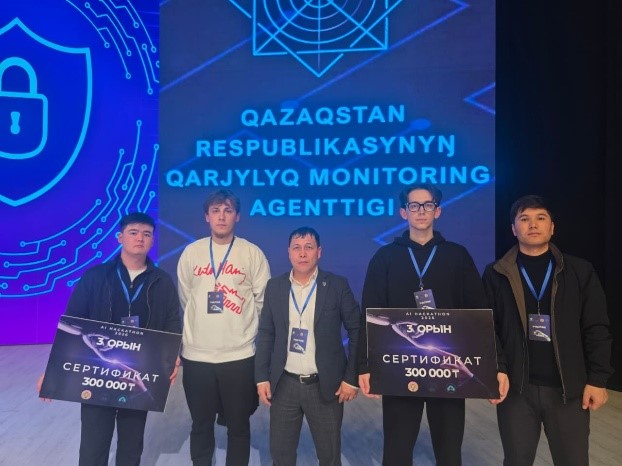
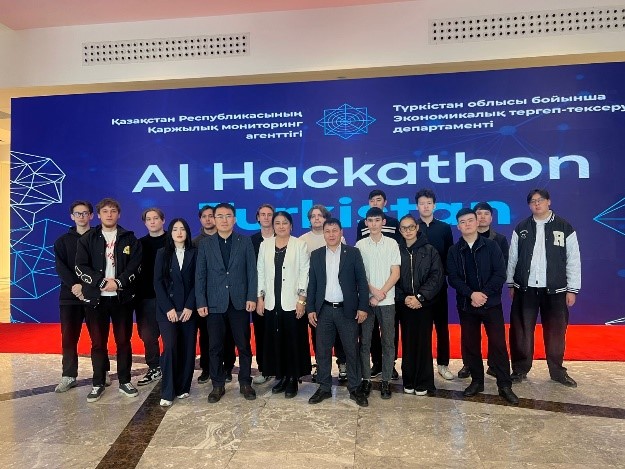
- At the interregional hackathon “Financial Security in the Era of Digitalization and Artificial Intelligence,” held on February 25–26, 2026, in Turkestan and organized by the Department of Economic Investigations and Khoja Akhmet Yassawi International Kazakh-Turkish University, 142 teams and around 400 participants were registered. Projects were presented across five main tracks.
- In the track “AI Digital Trace – Detection of Illegal Sellers on the Telegram Platform,” students B.P. Khaitbaev (group IP-22-3k3), S. Kazybekkyzy, and B.S. Narimanov (group IP-23-3k3) won 3rd place and received a prize of 300,000 tenge.
- In the track “AI Analysis of Public Procurement,” students S.I. Bondarev and K.G. Ayrapetyants (group IP-22-3r) won 3rd place and were awarded 300,000 tenge.
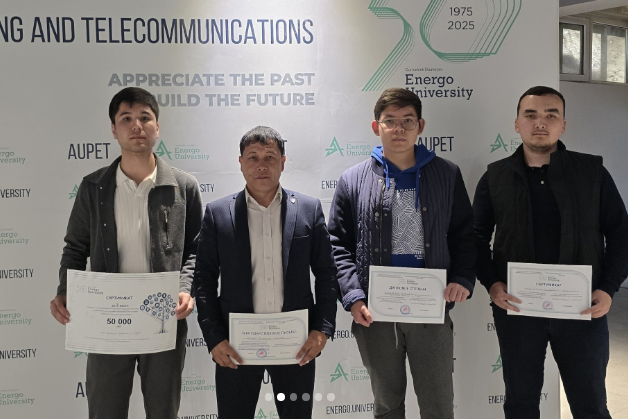
- On April 17–18, 2025, at the National Subject Olympiad held at Almaty University of Power Engineering and Telecommunications named after Gumarbek Daukeev, students of the “Information Systems” program won 3rd place.
- Under the supervision of G.E. Tileuov and Zh.D. Iztayev, students B.P. Khaitbaev, D.E. Omirbek, and A.S. Sharapov demonstrated a high level of knowledge and professional competence.
- From December 6 to 8, 2025, the hackathon “AI-Sana Shakarim Solveathon: AI & Agriculture-2025” was held at Shakarim University.
- Representing our university, the team included senior lecturer Gamidulla Yesbolovich Tileuov as team leader, students of group IP 23-3k3 Saltanat Kazybekkyzy and Ulan Maratuly, and student of group IP 22-6tk Alibek Esengeldiev as team members.
- On November 24, 2025, at the Spartakiad of M. Auezov South Kazakhstan University, students of group IP 24-3k3 Beiyas Seiduali, Askhat Kanat, and Dosymzhan Zhandaraly took 1st place in tug-of-war, while Zhangbolat Sagat won 2nd place in football as part of the Higher School team.
In connection with the launch of the new educational program 6B06121 – "Artificial Intelligence Technologies" – in 2023, and in light of current trends in the development of artificial intelligence and digital technologies, the Department of Information Systems and Modeling is systematically improving the qualifications of its faculty.
The department's faculty annually participate in professional development courses, master classes, and training sessions organized by leading centers in the field of artificial intelligence, digital technologies, and data analysis. These events are aimed at enhancing professional competencies, mastering modern methods of artificial intelligence, machine learning, and big data analysis, as well as integrating intelligent technologies into educational and research processes.
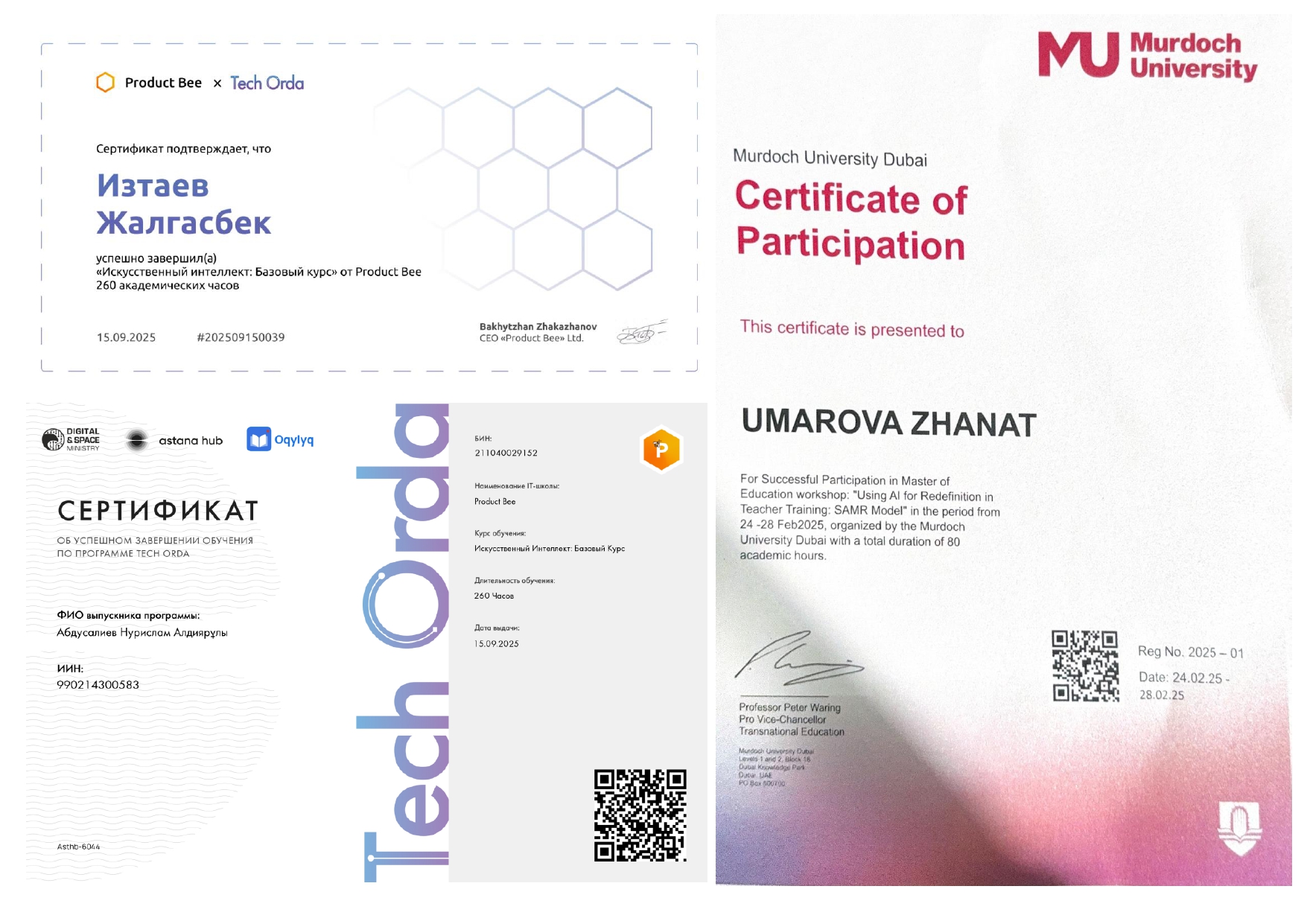
As part of this professional development program, seven department members successfully completed the 9-month educational course "Artificial Intelligence" from December 9, 2024, to September 15, 2025. The "Basic Course" was organized by the Product Bee IT School (Astana) and the Astana Hub. Participants in the program included:
- Associate Professor Iztayev Zh.D.
- Associate Professor Makhanova Z.A.
- Professor Umarova Zh.R.
- Senior Lecturer Elbergenova G.Zh.
- Senior Lecturer Tileuov G.E.
- teacher Suleimen O.M.
- teacher Abdusaliyev N.A.
During the course, the instructors mastered modern methods for developing and implementing artificial intelligence systems, including machine learning technologies, data analysis, developing intelligent solutions, and using AI tools in the educational process.
In addition, the higher education institution and university regularly hold winter schools dedicated to current issues of digitalization and artificial intelligence. The department's faculty took an active part in the following educational programs:
- "Innovative Prospects of Artificial Intelligence and Information Technology" (January 20–January 31, 2025);
- "Natural Sciences and Pedagogical Innovations in the Context of Digitalization" (January 20–January 31, 2025);
- "Modern Automated Monitoring and Control Systems Using AI" (June 23–July 5, 2025);
- "Digital Kazakhstan: Artificial Intelligence as an Engine of Growth" (December 8–December 19, 2025).
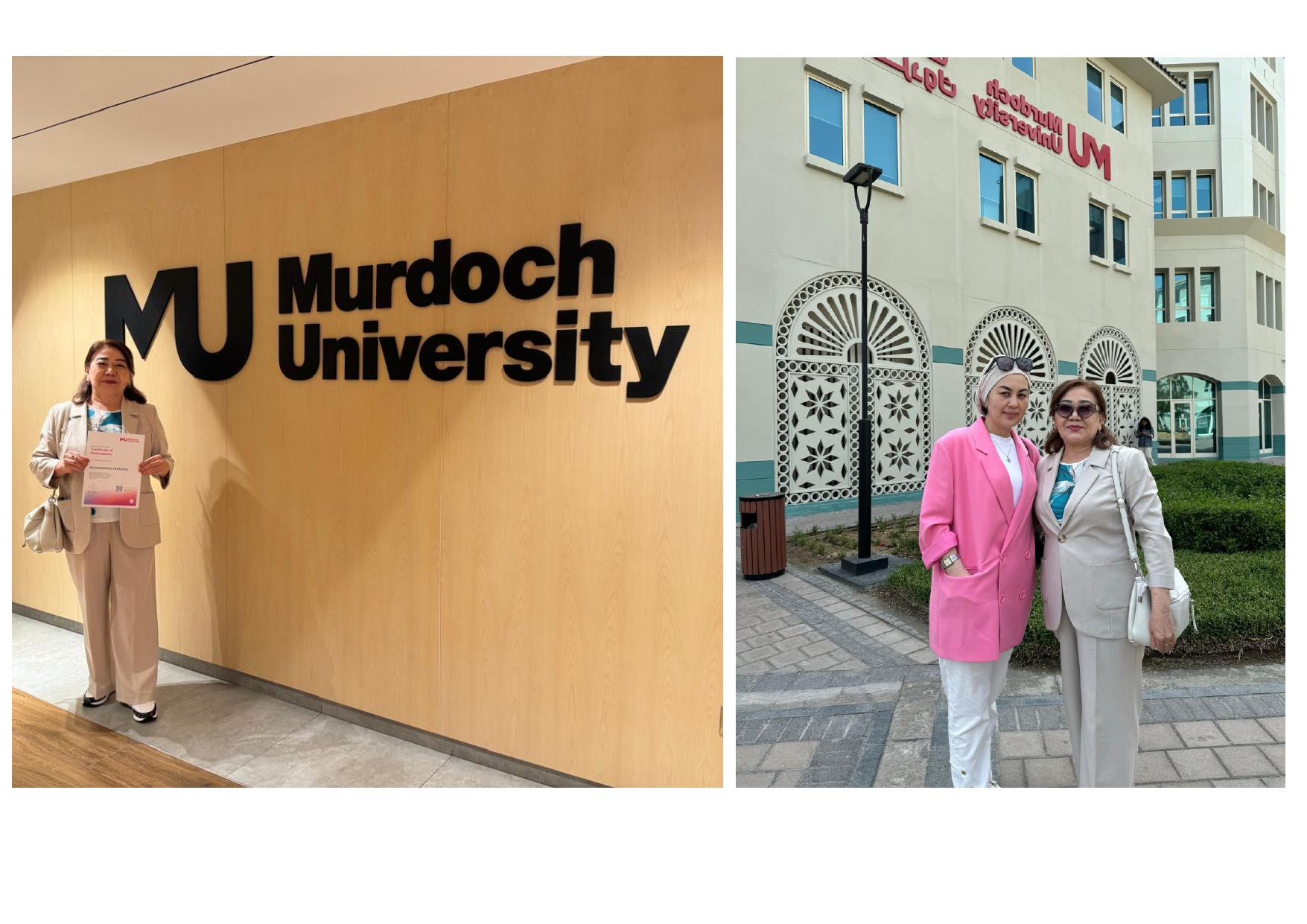
Also Professor Zh.R. Umarova and Associate Professor P.A. Kozhabekova From February 24 to 28, 2025, students completed the international advanced training course "Using AI for Redefinition in Teacher Training: SAMR Model" at Murdoch University (UAE), where they explored modern approaches to the application of artificial intelligence in education, scientific research, and engineering.
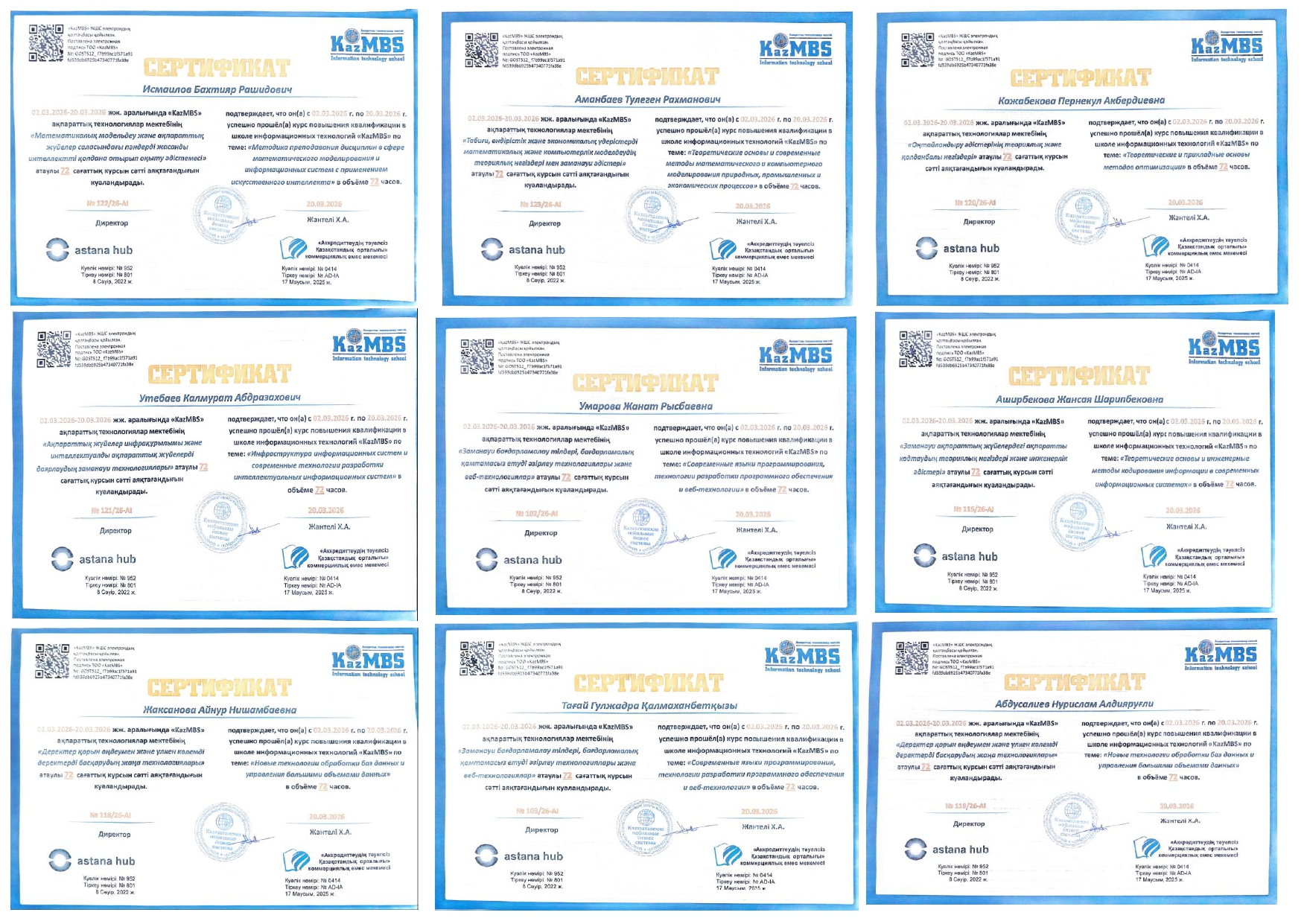
From February 23 to March 6, 2026, eight faculty members from the department completed the advanced training course "Artificial Intelligence and Digital Technologies" at M. Auezov South Caucasian University.
Thus, the Department of Information Systems and Modeling prioritizes faculty development in the field of artificial intelligence. This work contributes to the implementation of modern educational technologies, the development of scientific research, and the provision of a high level of training for students in the 6B06121 "Artificial Intelligence Technologies" educational program in accordance with the requirements of the digital economy and the development of intelligent systems.
Research objective: Development of scientific research in the fields of information systems, artificial intelligence, and computer modeling
Research Objectives:
- Participation in scientific grant competitions and targeted funding programs organized by the Ministry of Science and Higher Education of the Republic of Kazakhstan
- Conducting fundamental and applied scientific research, including state-funded and initiative-based projects.
- Publication of research results in national and international peer-reviewed journals.
- Implementation of research results into the educational process and industry.
- Engagement of students in research activities.
- Development of scientific collaboration with national and international educational institutions and research centers.
Department of Information Systems and Modeling
The organization and implementation of academic mobility at the Department are carried out in accordance with the following regulatory documents:
– Rules for the organization of the educational process based on credit technology;
– Concept of Academic Mobility of Students in Higher Education Institutions of the Republic of Kazakhstan;
– QMS SKU PR 7.11–2020 “Organization of Student Academic Mobility”.
The coordination of exchange programs is ensured by the Center for the Bologna Process and Academic Mobility, which facilitates the participation of students and faculty members in national and international initiatives.
Strategic Role of Academic Mobility
Academic mobility is one of the priority areas for the development of the Higher School of Computer Engineering and Energy.
The following forms are implemented:
✔ Internal mobility (study at leading universities in Kazakhstan)
✔ External mobility (a semester or academic period abroad)
✔ Visiting international lecturers
✔ Winter and summer schools
Undergraduate and graduate students of the following educational programs regularly participate in seminars, information sessions, and academic mobility initiatives:
- 6B06120 – Information Systems
- 7M06120 – Information Systems
- 6B06140 – Mathematical and Computer Modeling
- 7M06140 – Mathematical and Computer Modeling
- 6B06121 – Artificial Intelligence Technologies
International Partnerships
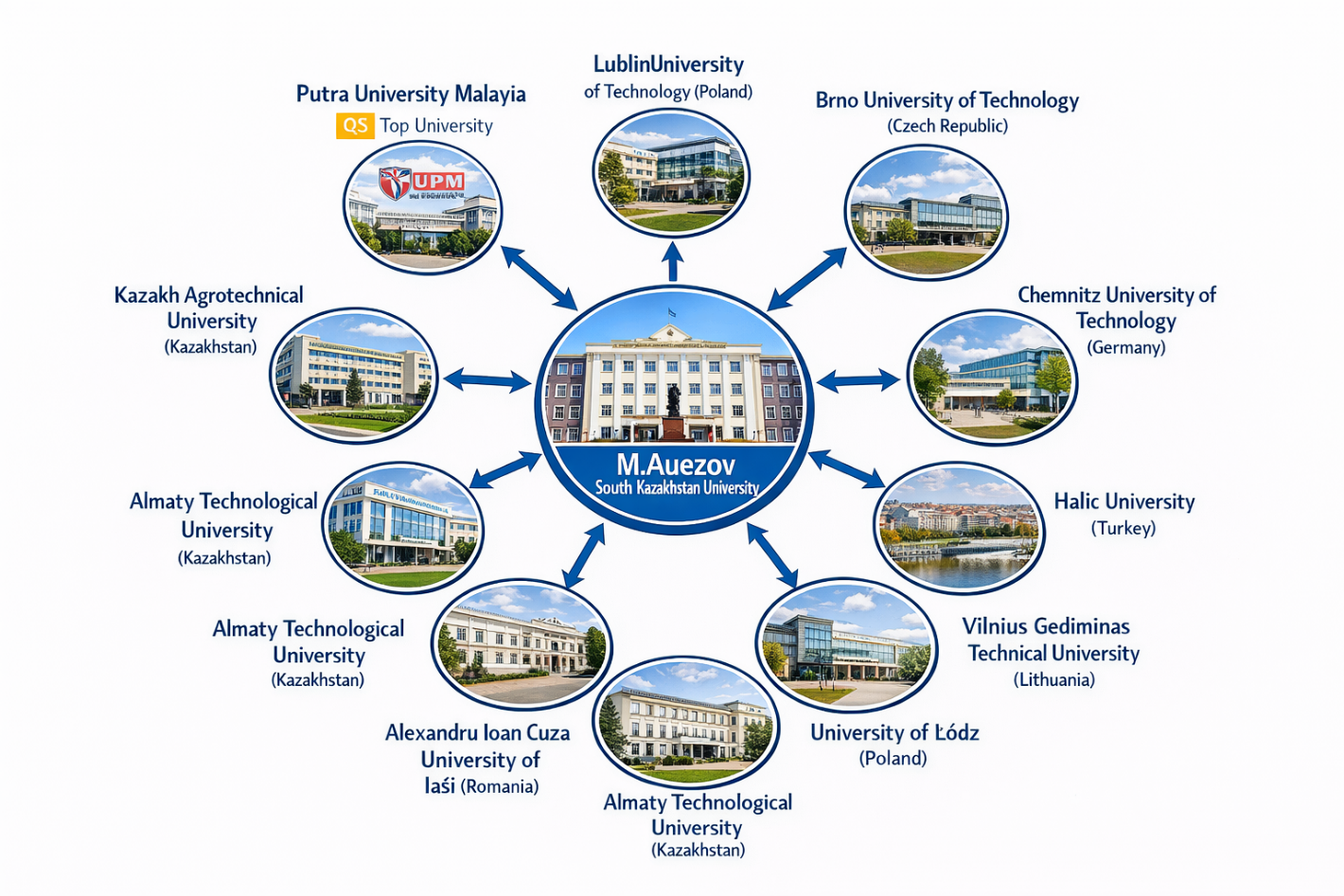
The Department maintains stable academic cooperation with both international and national universities.
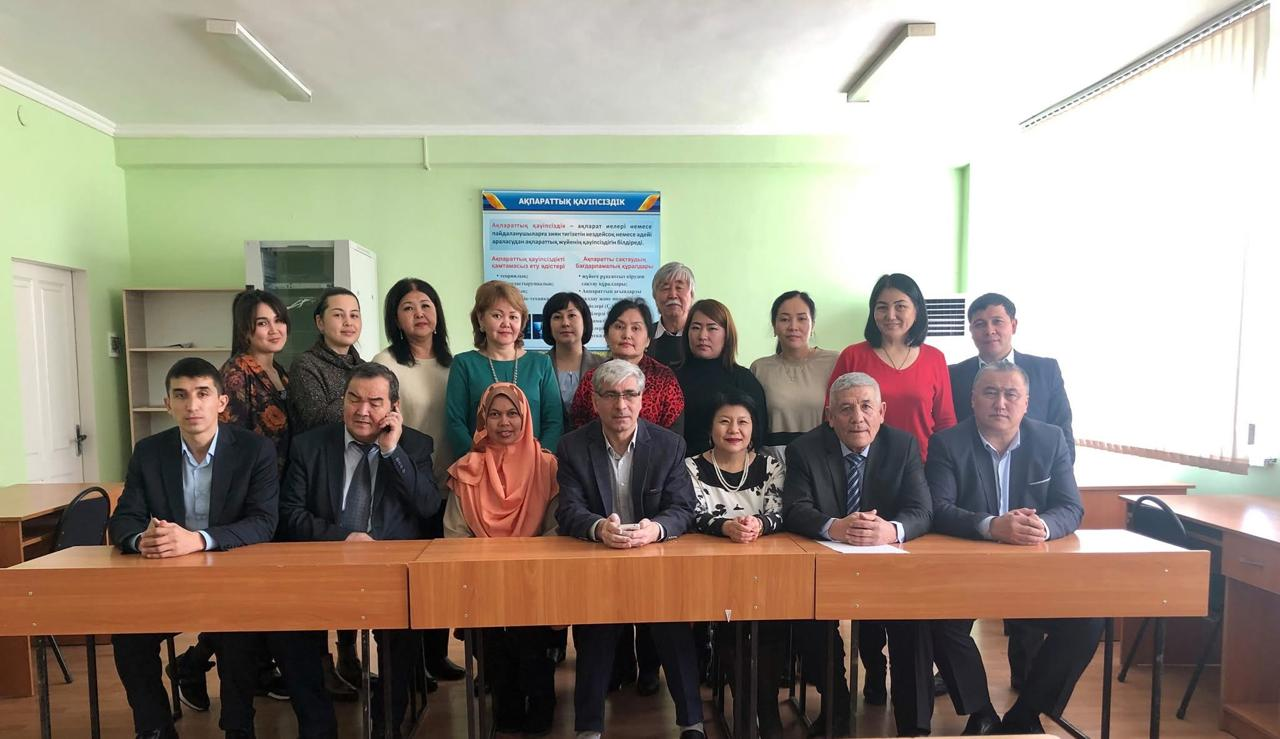
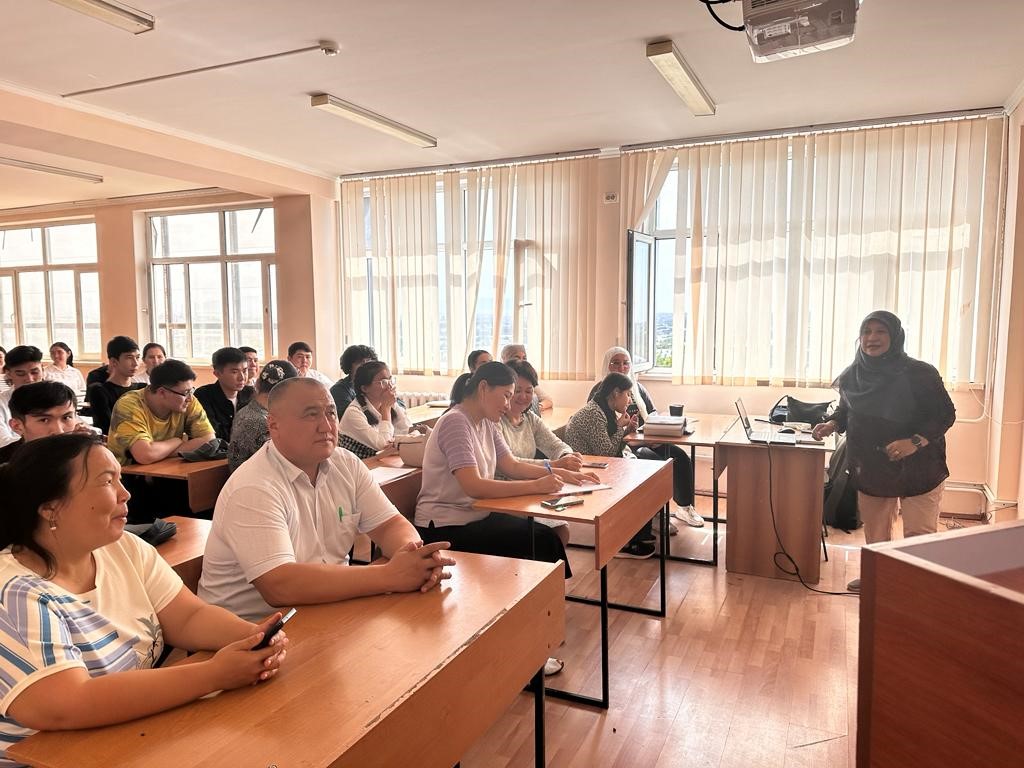
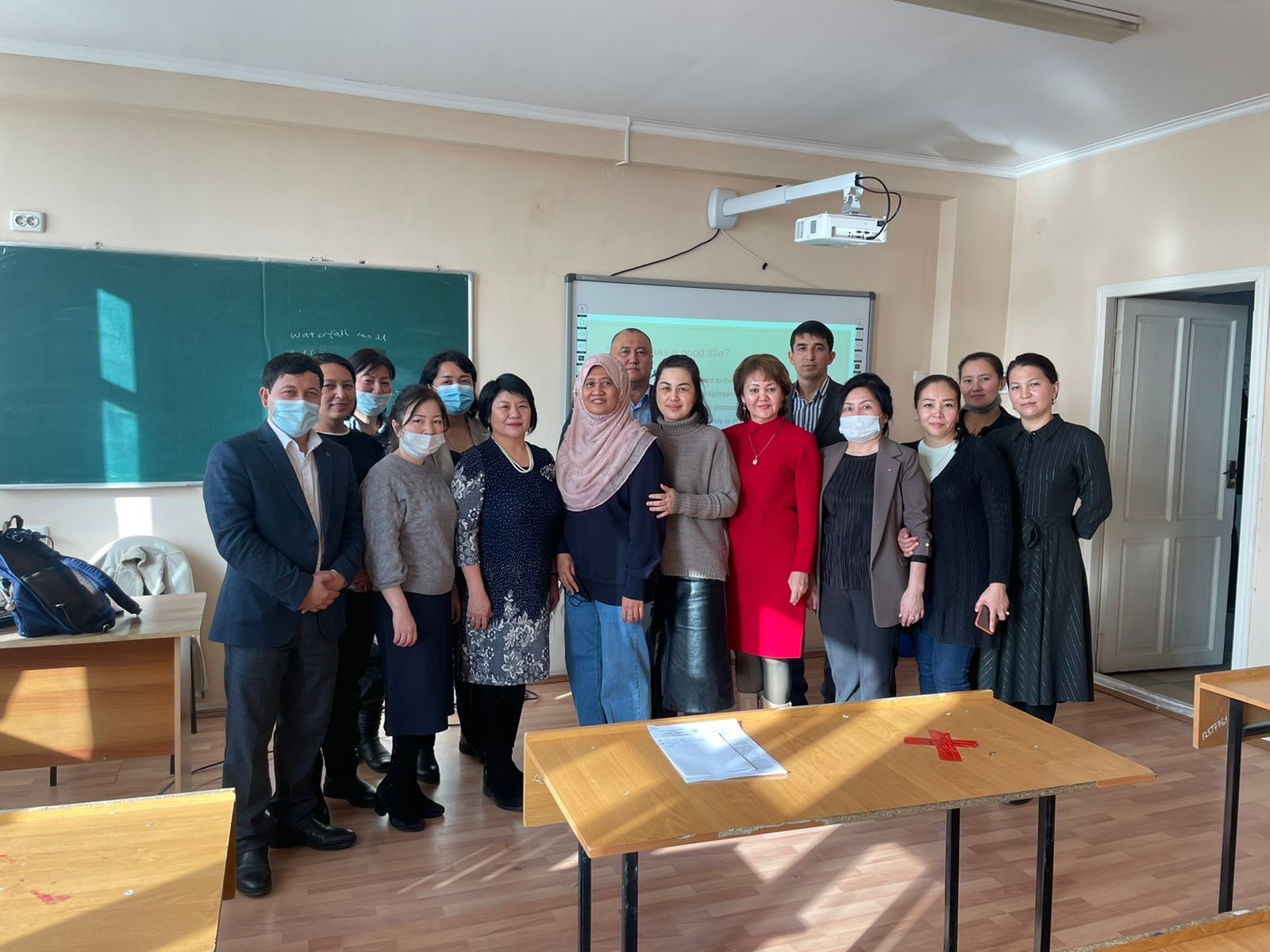
Each year, foreign professors and experts are invited to deliver lectures and conduct workshops. Among the invited lecturers are leading scholars from international universities, including:
Professor Nur Izura Udzir (Universiti Putra Malaysia, Malaysia),
Professor Shamsollah Ghanbari (Islamic Azad University, Iran),
Professor Yusmadi Jusoh (Universiti Putra Malaysia, Malaysia),
Professor Fatimah Khalid (Universiti Putra Malaysia, Malaysia),
Professor Masrah Azrifa (Universiti Putra Malaysia, Malaysia).
Implementation of Student Academic Mobility
Within the framework of the educational programs 6B06120 “Information Systems”, 7M06120 “Information Systems”, 6B06140 “Mathematical and Computer Modeling”, 7M06140 “Mathematical and Computer Modeling”, and 6B06121 “Artificial Intelligence Technologies”, the Department actively implements both internal and external academic mobility.
Each year, students of the Department study at leading universities in the Republic of Kazakhstan as well as at universities abroad, enabling them to gain international academic experience and master modern approaches in the fields of information technology and modeling.
Within internal mobility, students study at leading technical universities in Kazakhstan, where they take courses related to information systems, digital technologies, and applied programming.
External academic mobility covers a wide range of foreign universities, including:
- Brno University of Technology (Czech Republic) — programs in information technologies and engineering systems;
- Universiti Putra Malaysia (Malaysia) — advanced studies in modern IT solutions and software engineering;
- Chemnitz University of Technology (Germany) — computer modeling technologies and software system development;
- University of Lodz (Poland) — information systems and data analysis;
- Halic University (Turkey) — applied aspects of IT and digital platforms.
The geography of academic mobility includes countries in Europe and Asia, such as the Czech Republic, Germany, Poland, Turkey, and Malaysia.
Such diversity of educational trajectories ensures:
- integration of students into the international educational environment;
- acquisition of advanced educational technologies;
- development of professional competencies in a multicultural context;
- improvement of foreign language proficiency;
- development of adaptability to different educational systems.
Special attention is paid to the alignment of completed courses with the Department’s curricula, ensuring full credit transfer upon students’ return.
Report on Academic Mobility and International Cooperation of the Department of Information Systems and Modeling for the 2024–2025 Academic Year
From September 1, 2024 to July 1, 2025, the following students of the Department of Information Systems and Modeling studied at universities in Kazakhstan and abroad within the framework of internal and external academic mobility.
Internal Academic Mobility (Incoming)
1st Semester
|
No. |
Full Name |
Educational Program |
Year |
University |
Country, City |
Period |
|
1 |
Dulat Ganiuly Boranbay |
6B06120 Information Systems |
4 |
S. Amanzholov East Kazakhstan University |
Kazakhstan, Ust-Kamenogorsk |
02.09.2024 – 31.01.2025 |
|
2 |
Beksultan Oraluly Yessenbekov |
6B06120 Information Systems |
4 |
S. Amanzholov East Kazakhstan University |
Kazakhstan, Ust-Kamenogorsk |
02.09.2024 – 31.01.2025 |
2nd Semester
|
No. |
Full Name |
Educational Program |
Year |
University |
Country, City |
Period |
|
1 |
Dinara Daniyarkyzy Anarbek |
6B06120 Information Systems |
2 |
Almaty Technological University |
Kazakhstan, Almaty |
13.01.2025 – 30.06.2025 |
|
2 |
Nazym Nurbolatkyzy Tasbolat |
6B06120 Information Systems |
2 |
Almaty Technological University |
Kazakhstan, Almaty |
13.01.2025 – 30.06.2025 |
|
3 |
Kairat Rakhmanberdyuly Suleimenov |
6B06120 Information Systems |
2 |
Almaty Technological University |
Kazakhstan, Almaty |
13.01.2025 – 30.06.2025 |
|
4 |
Saltanat Edilkyzy Aryngazieva |
6B06120 Information Systems |
2 |
Almaty Technological University |
Kazakhstan, Almaty |
13.01.2025 – 30.06.2025 |
Internal Academic Mobility (Outgoing)
2nd Semester
|
No. |
Full Name |
Educational Program |
Year |
University |
Country, City |
Period |
|
1 |
Tolganay Musa |
6B06120 Information Systems |
3 |
Almaty Technological University |
Kazakhstan, Almaty |
20.01.2025 – 30.06.2025 |
|
2 |
Merey Murzakhmet |
6B06120 Information Systems |
3 |
Almaty Technological University |
Kazakhstan, Almaty |
20.01.2025 – 30.06.2025 |
|
3 |
Abdurakhman Moldabay |
6B06120 Information Systems |
3 |
Almaty Technological University |
Kazakhstan, Almaty |
20.01.2025 – 30.06.2025 |
External Academic Mobility (Outgoing)
1st Semester
|
No. |
Full Name |
Educational Program |
Year |
University |
Country |
Period |
|
1 |
Saltanat Kazbekkyzy |
6B06120 Information Systems |
2 |
University of Lodz |
Poland |
01.10.2024 – 02.03.2025 |
2nd Semester
|
No. |
Full Name |
Educational Program |
Year |
University |
Country |
Period |
|
2 |
Marlen Kadyrbekuly Isamail |
6B06140 Mathematical and Computer Modeling |
2 |
Universiti Putra Malaysia |
Malaysia |
17.03.2025 – 28.07.2025 |
According to the academic calendar and curriculum for the 2025-2026 academic year, the industrial internship for the Department of Information Systems and Modeling is conducted for the following educational programs: 6B06120 – «Information Systems», 6B06140 – «Mathematical and Computer Modeling», 6B06121 – «Artificial Intelligence Technologies»
The main purpose of industrial practice is to consolidate and develop the theoretical knowledge acquired by students in higher education institutions under real production conditions through a comprehensive study of the activities of the organization, institution, or enterprise where the practice takes place. This process enables students to develop the skills and experience necessary for professional activity, as well as to improve their ability to make professional decisions.
According to the State Compulsory Education Standard of the Republic of Kazakhstan, several types of practice are предусмотрены:
- Academic (educational) practice;
- Industrial practice I–II;
- Diploma (or pre-diploma) practice.
Practice bases:
- LLP “Digital Road Shymkent Hub”, Shymkent, Konayev St., 20/1
- LLP “Nur-Com-Tel”, Shymkent, Zhaysan St., 136
- Branch of NJSC “State Corporation “Government for Citizens” in Shymkent, Dulati St., 3
- Institution “Bolashak College” (non-profit), Shymkent, Baitursynov St., 74a
- LLP “BT Som”, Shymkent
- LLP “South Lider”, Turkestan Region, Lenger
- JSC “Joint Venture “ZARECHNOYE”, Shymkent
- LLP “Grand Merei”, Shymkent, Kasymbek Datka residential area, Musayev St., 8
- LLP “Qazaq Gaz Stroy”, Shymkent
- LLP “IT Invest Group”, Shymkent
- LLP “BAIJUMAN CONSTRUCTION”, Shymkent
- Research Center “Theoretical and Applied Mathematics”, M. Auezov South Kazakhstan University, Shymkent, Tauke Khan Ave., 5
- LLP “Egov Systems”, Shymkent
- Public Institution “Department of Digitalization, Public Services and Archives” of Turkestan Region
- LLP “BF-Group KZ, Construction Company”, Shymkent
Employment of Students in the Educational Program 6B06121 – Artificial Intelligence Technologies
The educational program 6B06121 – Artificial Intelligence Technologies is one of the most relevant fields in the context of modern digital transformation. The program is aimed at training highly qualified specialists in artificial intelligence, machine learning, data analysis, and the development of intelligent systems.
The curriculum is designed in accordance with current labor market demands and focuses on preparing specialists capable of solving real-world practical problems.
Employment Rate
The graduation of the first cohort of students in this program is planned for the coming academic years.
However, considering global and national labor market trends, as well as the outcomes of similar IT programs, a high level of graduate employment is expected.
The program places special emphasis on gaining professional experience, completing internships, and participating in real projects, which enables graduates to secure employment within a short period after graduation.
Collaboration with Employers
The department actively develops partnerships with IT companies, research centers, and organizations in the field of digital technologies.
Currently, stable partnerships have been established with the following leading organizations:
- LLP “KazMBS” – School of Information Technology
- LLP “Balance Service”
- LLP “Innova Corrapation Company”
- LLP “IT Invest Group”
- LLP “Asia IT Service”
- LLP “Sphere-F” and others
Within the program, further cooperation is planned in the following areas:
- IT companies and startups
- organizations specializing in data analysis and artificial intelligence
- financial and fintech sector companies
- government digitalization projects
Dual Education
Elements of dual education have been integrated into the program. Currently, student training is carried out in cooperation with the School of Information Technology of LLP “KazMBS”.
Within the dual education system, students:
- undertake internships in IT companies alongside their studies
- work on real-world projects
- gain experience in a professional environment
- master modern tools and technologies
This approach ensures an effective combination of theoretical knowledge and practical skills and accelerates students’ adaptation to labor market requirements.
Labor Market Demand for Graduates
Today, artificial intelligence technologies are rapidly developing across all sectors. Intelligent systems are widely used in healthcare, finance, education, industry, and public administration.
As a result, the demand for AI specialists is increasing every year.
Graduates of the program are expected to be in high demand in the following areas:
- data analysis
- machine learning
- development of intelligent systems
- business process automation
Main Career Paths
Graduates of the program can pursue careers in the following fields:
- Artificial Intelligence Engineer (AI Engineer)
- Machine Learning Engineer
- Data Analyst / Data Scientist
- Computer Vision and Natural Language Processing (NLP)
- design and implementation of intelligent systems
- business process automation
Advantages of the Educational Program
- modern and in-demand field – artificial intelligence
- practice-oriented curriculum
- project-based learning approach
- learning through real cases and tasks
- alignment with labor market requirements
- integration with the IT industry
Conclusion
The educational program 6B06121 – Artificial Intelligence Technologies is a modern and перспективный (перспективный → corrected: promising) field aimed at training future professionals.
The program not only provides students with theoretical knowledge but also equips them with the skills needed to work in real professional environments, solve complex problems, and contribute to the development of the digital economy.